Many firms combine methods. We fuse them, cross-checking every finding across all three lenses.
It answers What is actually true, and how confident can we be?
How the fusion worksAdvertising & Communications
Making the ad costs a fraction of putting it in front of people, and the media is committed long before anyone knows whether the creative earns it. A route that wins the room can read as noise in the feed, or as something else entirely in another market. We test the work while it can still change, and we read the campaign afterwards closely enough to say why it moved.
What’s at stake
Depth is what keeps it standing.
Our lens
The people who made the ad know the brief, the strategy and the thirty versions that came before it. The person scrolling past knows none of that and gives it two seconds, next to everything else on the screen and everything they already think about your brand. What they take away in those two seconds is what the media budget pays for. That’s where our H3™ method earns its place: three lenses, fused into a single reading you can act on.
Many firms combine methods. We fuse them, cross-checking every finding across all three lenses.
It answers What is actually true, and how confident can we be?
How the fusion worksWhat we do
Each one answers a different question, from the routes you’re still choosing between to the effect you need to explain once the media has run.
Advertising & Communications | 01 of 04
Testing for ads and creative routes before they go live, so you know which one works, why, and what it will teach people about your brand.
A single score tells you which route won but not why. The same thirty seconds can lead on attention and still tell people your brand thinks they’re failing.
We test the work against the questions your campaign actually has to answer, in every market it runs in, and give you the number and the reason behind it while the work can still change.
Tick the ones that sound familiar.
Two or more sound familiar? That’s usually where our first conversation starts. Tell us the decision you’re facing
Advertising & Communications | 02 of 04
Effectiveness research for campaigns that carried real budget, so you know what worked, what didn’t and what’s worth paying for again.
Markets move on their own: rivals go quiet, promotions run, seasons turn. All of it lands on the same tracker line as your campaign.
We separate what your work did from what the year was already doing, with more than one source of evidence, and give you the part that’s yours and the size of it.
The tracker says consideration rose 6.2 points. How much of that was the campaign?
Same bank, three months after the launch campaign ran in Spain, Mexico and Germany. Consideration is the share of people who would think of the brand the next time they need a bank. It rose 6.2 points, and the deck celebrated all 6.2.
Three other things were happening in those same weeks.
Step through it. Each step takes back a piece of the six points and shows what caused it.
The whole bar is the 6.2-point rise. Each block is the part of that rise one cause is responsible for. Blocks that turn pale have been claimed by something other than the campaign, and the colour of the top edge is the lens that caught it.
This is the number in the deck. It’s real and it’s what the tracker measured, but on its own it can’t tell you what to do next.
An illustration of how effectiveness work is put together, built for this page. In a real project the causes come from your own market and calendar, and every figure carries its margin of error.
Tick the ones that sound familiar.
Two or more sound familiar? That’s usually where our first conversation starts. Tell us the decision you’re facing
Advertising & Communications | 03 of 04
Research that weighs each channel by what it does for your message as well as by its reach, so your media budget goes to the places where people are ready to listen.
Media plans tend to rest on two numbers, reach and cost. Neither says what happens to your message once it arrives, and the same audience is open in one place and defensive in another.
We find where your audience is, what state they’re in when they get there, and what each channel is worth for the job you’re hiring it to do.
Which channels deserve the money?
Same bank, planning the next flight across Spain, Mexico and Germany, with seven channels and one budget. The media agency split it on reach and cost. Drag the slider and the same budget moves to where the evidence puts each channel.
Drag the slider from one end to the other. Hover or tap any channel to read what changed.
The thin mark stays where the plan left each channel. As you drag, the bar moves to where the evidence puts it, so every channel shows how far it travelled and in which direction. The colour under each channel name is the lens that produced its weighting.
Seven channels, one budget, two ways of splitting it. Three channels lose money here and four gain it, and none of that comes out of a reach and cost calculation.
An illustration of how channel work is put together, built for this page. In a real project the weights come from your audience in your markets, and each one arrives with the evidence behind it.
Tick the ones that sound familiar.
Two or more sound familiar? That’s usually where our first conversation starts. Tell us the decision you’re facing
Advertising & Communications | 04 of 04
Research-based strategy for what your communication should say, to whom and in what order, so your campaign builds on beliefs your audience already holds.
A message is a chain: the promise on top only works if the beliefs underneath are already in place. When one is missing, the budget goes on arguing for it.
We map the chain, test each link with the people you’re talking to, and hand you the order things have to be said in.
What has to be true before anyone believes the offer?
Same bank, same three markets. The promise at the top is the line the brand wants to own. Under it sit the three beliefs that have to be in place for that line to mean anything, each one tagged with its current state and the lens that measured it.
Open a belief to see what would move it. Only one opens at a time.
Three beliefs sit under the promise. One is already held, one is damaged, and one was never there. The order of the campaign is decided by the belief that’s missing, not by the promise on top.
An illustration of how message architecture is put together, built for this page. In a real project the beliefs come out of your category and your markets, and each state carries the evidence that produced it.
Tick the ones that sound familiar.
Two or more sound familiar? That’s usually where our first conversation starts. Tell us the decision you’re facing
How the work runs
A recommendation is only as trustworthy as the work behind it. These are the foundations ours runs on, each with its own page.
Who runs your project
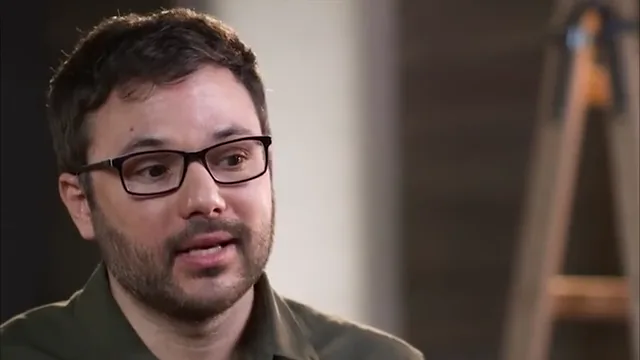
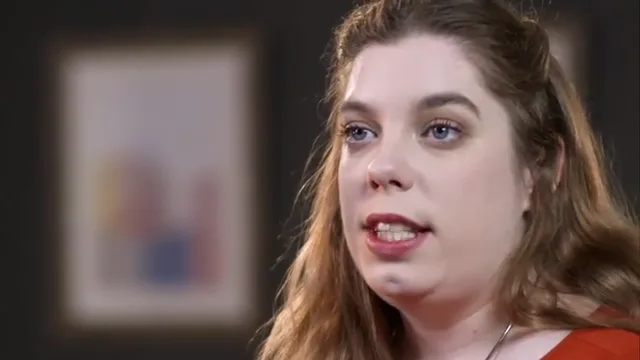
Boutique has a practical meaning here: Abdo López and Norah Walsh, both social anthropologists, work on every project, and nothing is handed to juniors once the contract is signed.
“The riskiest assumptions are the ones everyone in the room already agrees on. Our job is to find out whether they’re true before you bet on them.”
Where this connects
When an ad underperforms, the cause often sits upstream, in who the audience is, what the brand stands for or what the product promises. That’s where these three come in.
On your business model
 Brand & Cultural StrategyOwn a brand position competitors can’t copy and customers can’t forget.Explore Brand & Culture
Straight answers
Something else on your mind? Ask us directly. You’ll get an answer from the people who would run the work.
Yes, and that’s the point at which the work is worth the most. Production costs a fraction of amplification, and the media is usually committed long before anyone knows whether the creative earns it. We test routes at whatever stage they exist, from a written line to a storyboard to a finished cut, and we read them for meaning as well as for score. Turnaround depends on how many routes, how many markets and how deep the reading needs to go, and we give you the timeline alongside the quote. If your production date is fixed, it shapes the plan from the start rather than turning up as a problem halfway through.
Every quote is built for the project, because the variables move a great deal. It depends on how many routes or assets go into the test, who has to see them and how hard that audience is to recruit, whether that means general consumers, a category audience or B2B decision makers, how many markets, how many participants, how deep the reading goes, how urgent it is, and what you need in your hands at the end. Testing three routes in one market and reading a full campaign across three are different projects with very different numbers. Most of our projects sit in the six-figure range. We scope after a proper conversation about the decision you’re making, and you get a fixed price and a timeline before any work begins.
The agency and the research answer different questions, and both are needed. An agency optimises the piece it made, which is the right instinct, but it’s hard to be objective about your own work. We read why that piece means what it means to the people watching it, in their market and in their words, and we do it without a stake in which route wins. We also build on the testing you already have rather than starting from zero: if there are scores, we use them as a starting point and go after the part they can’t explain, which is usually why the number came out that way and what it will cost you on the fifth viewing.
Usually because the work carried an assumption that travelled badly. Not the language, which is the easy part, but what the piece takes for granted about the person watching it: what is polite, what counts as help, what a brand is allowed to say about your money or your body or your family. A route that reads as supportive in one market can read as supervision in the next, with nothing changed but the audience. In practice you rarely need to abandon the campaign: the fix is to find which element carries the assumption and rebuild that element, a much smaller job when you find it before the media runs.
By taking out everything else that was happening in the same weeks. Categories grow on their own, competitors go quiet, promotions run, seasons turn, and all of it lands on the same tracker line as your campaign. Some of that is visible in the data, and some of it isn’t: a rival cutting spend for six weeks shows up in listening long before it shows up in a model. So we separate the lift into what the market was doing anyway and what your work moved, and then split that second part between what the media plan bought and what the creative earned. A number you can’t reproduce is a good year, and a number you can reproduce is a plan.
By not asking one question and calling it the answer. A single score forces attention, comprehension, respect and wear-out into the same number, and the routes that win on one of those often lose on the others. So we test against the questions your campaign actually has to answer, and each one gets the lens that can answer it. How many people took it in is a quantitative question, what it made them feel about themselves only surfaces in conversation, and whether it survives the fifth exposure shows up in how people talk about it online, unprompted. Read together, the three lenses give you a recommendation with its reasoning attached, which is what lets a creative director argue with it properly instead of being handed a verdict.
Both, and the connection between them is what the firm is built on. We call it insight-led strategic intelligence because research earns its cost when it makes the strategy sound. In this category that means you get the evidence and what to do with it: which route to produce and what to change in it first, which line is costing you, where the message has to start because the belief underneath it isn’t there yet, which channels deserve more of the budget than the plan gave them. The point of all of it is that your company loses less time and money going in the wrong direction.
Abdo López and Norah Walsh lead every project in person, from the framing session to the final reading, and everyone working alongside them is senior, with more than a decade in the field. Around that core we build the team for the project. The right moderator for a creative session in Mexico isn’t the right one for Germany, and the specialist who reads social conversation isn’t the one who runs the survey, so we select the experts, the partners and the technology that fit the question, the technique, the country and the industry. There’s no handover to a junior once the contract is signed, and that’s the main reason we stay small.

Tell us the decision you’re carrying: three routes and a split room, or a campaign nobody can explain. You get a fixed price and a timeline before anything starts.