Many firms combine methods. We fuse them, cross-checking every finding across all three lenses.
It answers What is actually true, and how confident can we be?
How the fusion worksInnovation & Product Intelligence
Innovation is where conviction tends to run ahead of evidence. A concept the whole room believes in can still meet a market that shrugs, and by then the roadmap is locked and the budget committed. We get you close to real people early, while changing course is still cheap.
What’s at stake
Depth is what keeps it standing.
Our lens
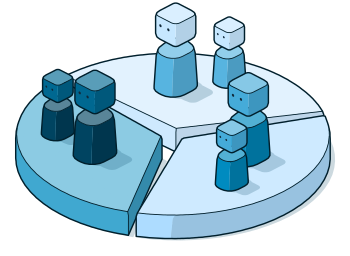
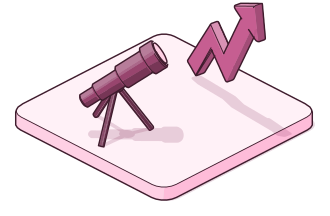
Adoption takes a different shape every time. Some products have to beat a routine that already works, others have to build one that never existed, and even the ones people love create frictions nobody planned for. Finding out which one you’re dealing with means watching how people live with the product once the novelty wears off. That’s where our H3™ method earns its place: three lenses, fused into a single reading you can act on.
Many firms combine methods. We fuse them, cross-checking every finding across all three lenses.
It answers What is actually true, and how confident can we be?
How the fusion worksWhat we do
Each one answers a different question in the life of an idea, from the first shortlist to the weeks after launch.
Innovation & Product Intelligence | 01 of 06
We test your list of ideas with the people who’d buy them and look for the ones nobody wrote down, so your budget goes to the few ideas the market is asking for.
A pipeline built in a workshop only holds what the people in the room already thought of. Screening it is half the job; the other half is out in the market.
We tell you which candidates hold up, which ones are close enough to be worth reshaping, and what the fieldwork found that nobody had written down.
Say you sit on the innovation committee of an insurer, in life and family protection, and a two-day workshop has just produced twelve candidates. Drag the slider from gut feel to the full H3™ method, and watch what happens to the list.
 Human StoriesQual
 Heartbeat+ Social
 Hard Evidence+ Quant
Twelve candidates, none of them tested against anything yet. At gut feel they all look equally promising, which is exactly the problem: nothing here separates a real opportunity from a confident guess.
Tick the ones that sound familiar.
Two or more sound familiar? That’s usually where our first conversation starts. Tell us the decision you’re facing
Innovation & Product Intelligence | 02 of 06
We test your concept or product with real people, measuring what they do as well as what they say, so you launch something people will actually use.
Ask people if they like an idea and most will say yes, because they answer as the person they’d like to be. Launches can fail in the gap between that and what they do.
We measure the way people really behave, show you where the intent leaks away, and tell you what to change so the product survives contact with real life.
Say a fintech app is about to launch a new automatic saving feature, and the concept test came back glowing. The number you get depends on the question you ask. Switch from what people say to what they do, then open each step to see where the intent leaks away.
Right now you’re looking at what people say. Switch to what they do, and the same concept tells a very different story.
Tick the ones that sound familiar.
Two or more sound familiar? That’s usually where our first conversation starts. Tell us the decision you’re facing
Innovation & Product Intelligence | 03 of 06
A working version of your app, website or tool, built from the research and tested with your users, so your team builds the final product from something already proven.
Research usually ends in a report and the product team builds from slides. Somewhere between the two, what people actually needed gets lost.
We put a working version in the hands of the people who’ll use it and keep testing and changing it, round after round, until it holds up.
Say a supermarket chain wants an app for the weekly shop. We build a working version, put it in the hands of its customers for a week and watch what happens, round after round, until the weekly order goes through without anyone needing help.
Most gave up halfway through the list. Searching thirty products one by one felt like work, and the shop took them twenty minutes.
Last week’s basket appears on the home screen, ready to repeat and adjust.
Tick the ones that sound familiar.
Two or more sound familiar? That’s usually where our first conversation starts. Tell us the decision you’re facing
Innovation & Product Intelligence | 04 of 06
Research for products the market has no shelf for yet, so you choose how people understand it before they choose for you.
When something is genuinely new, people compare it with the nearest thing they know. That silent comparison sets the price they expect and the objection they raise.
We find the frames the market actually uses, show you what each one does to price and objection, and tell you which one to build the category on.
Say you launch fresh, human-grade dog food on subscription, at around a hundred and twenty euros a month. There’s nothing quite like it, so buyers reach for a reference of their own. Pick the frame they compare it to, and watch the price they expect, the objection they raise, and who buys all move at once.
They compare it to…
Against a sack of dry food, fresh looks like a rip-off. This is the frame the category tends to fall into by default, and the one that can kill it before it starts.
Tick the ones that sound familiar.
Two or more sound familiar? That’s usually where our first conversation starts. Tell us the decision you’re facing
Innovation & Product Intelligence | 05 of 06
Research that tests your packaging where it competes, on the shelf and in the hand, so you pick the design that does its job in front of a real buyer.
Packaging is usually chosen in a quiet room, up close. The shelf works differently: shoppers arrive wanting different things, and a label can only speak to one of them.
We find out who’s actually standing in front of your product and what each of them is looking for, so the design is built for a real buyer instead of the one the room imagined.
Say a brand launches a magnesium supplement for sleep, and three very different shoppers reach the same shelf. It’s hard for one label to win all three. Choose a shopper to see what they scan for, where their eye lands first, and what the same label does for the other two.
The generalist just wants to sleep better, and scans for the problem in plain words.
The generalist doesn’t know magnesium from melatonin, and doesn’t need to. They scan the aisle for their problem, so the pack that reaches them is warm and simple: a night sky and one plain word. For this shopper, that jar is exactly right.
Tick the ones that sound familiar.
Two or more sound familiar? That’s usually where our first conversation starts. Tell us the decision you’re facing
Innovation & Product Intelligence | 06 of 06
Research into how the work really happens before and after a new tool arrives, so the tool you bought becomes part of how people actually work.
Buying the tool is the easy part. People already have a way of working, with its own shortcuts and reasons, and a new system only sticks when it fits that reality.
We map how the work really happens, where the tool gets abandoned and why, and what has to change for adoption to be real rather than reported.
Say a financial advisory firm rolls out an AI copilot so its analysts write reports faster. On paper the workflow is a clean line. Switch to what actually happens on the floor, and watch the same four steps fill up with the detours the tool created.
On paper: minutes per report, clean and linear
In reality: slower, riskier, and eroding trust with clients and each other
The version in the sales deck: ask, draft, send, decide. Minutes per report.
Tick the ones that sound familiar.
Two or more sound familiar? That’s usually where our first conversation starts. Tell us the decision you’re facing
How the work runs
A recommendation is only as trustworthy as the work behind it. These are the foundations ours runs on, each with its own page.
Who runs your project
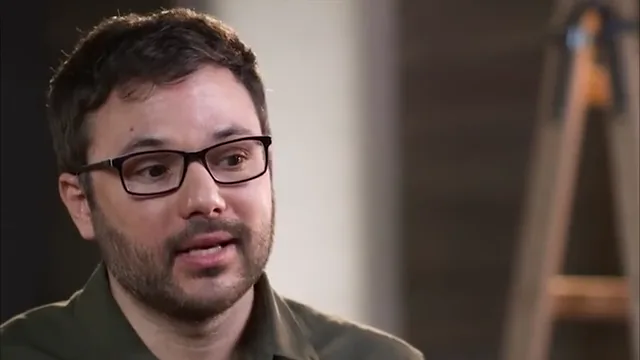
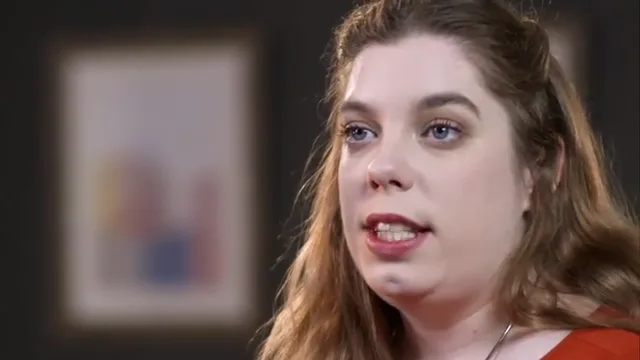
Boutique has a practical meaning here: Abdo López and Norah Walsh, both social anthropologists, work on every project, and nothing is handed to juniors once the contract is signed.
“The riskiest assumptions are the ones everyone in the room already agrees on. Our job is to find out whether they’re true before you bet on them.”
Where this connects
What you build touches how you take it to market, who you build it for and what’s coming next. These are the areas that sit closest to innovation work.
On your business model
 Growth & Market StrategyWhere to grow next and how to win when you arrive.
Straight answers
Something else on your mind? Ask us directly. You’ll get an answer from the people who would run the work.
Most innovation work runs between six and twelve weeks, though every project is scoped on its own terms. A single concept test moves faster than a category creation programme with fieldwork across several markets. We study the specific question first, then give you a timeline alongside the quote, and that’s the timeline we work to. If you have a stage gate, a launch window or a board date, it shapes the plan from the start rather than turning up as a problem halfway through.
Every quote is built for the project, because the variables move a great deal. It depends on how many techniques the question needs, who we have to reach and how hard they are to recruit, whether that means consumers, category buyers, B2B decision makers or niche experts, how many concepts, how many markets, how deep the analysis goes, how urgent it is, and what you need in your hands at the end. A quick read on one concept and a full innovation programme from idea to shelf are different projects with very different numbers. Most of our projects sit in the six-figure range. We scope after a proper conversation about the decision you’re making, and you get a fixed price and a timeline before any work begins.
We build on what you already have rather than starting from zero. Your tests, your data and your team are a useful starting point. We use them, then design the techniques the question actually needs to fill in what’s missing. A concept test that tells you people like the idea and research solid enough to commit a launch budget to are different things, and the distance between them is where expensive product mistakes tend to happen. Closing that distance is the work: evidence you can act on with confidence, on the questions that decide what to build, who to build it for, and how it earns its place in the market.
In practice the idea changes far more often than the decision does. The need is usually real, and what needs reworking is the framing, the audience, the positioning, the packaging, the price or the story you tell around it. The version drawn up in the room is rarely the version people actually reach for, and that’s the useful part of the answer. When the evidence does point away from an idea as drafted, your team reshapes it before the budget goes out instead of after. Category creation and packaging often turn on exactly this: the same product, read by a different buyer or framed against a different reference, stops being a hard sell and starts being obvious. That’s a good outcome, bought early and cheaply.
Earlier than most teams expect. You don’t need a finished product or even a prototype to get a real reading. An idea written in a single sentence is enough to start, because what we’re testing isn’t the artefact, it’s the need underneath it and how people already solve it today. Testing early is where the cheap learning lives: it’s far less costly to reshape a concept while it’s still a paragraph than to discover the problem after tooling, packaging and a launch plan are already paid for. We match the technique to how formed the idea is, from raw framing sessions to full concept work, so the research meets the idea where it actually is.
Because a concept test is easy to pass and easy to misread. Ask people whether they like an idea and most will say yes, partly out of politeness and partly because they’re answering about the person they would like to be, not the one who actually shops. The gap between what people say and what they do is where launches can fail, and reading it is the whole point of the work. We look at stated interest against real behaviour, at what people claim they want against what they already pay for and switch to, so the green light you get is one you can actually build on rather than one that evaporates at the shelf.
Both, and the connection between them is what the firm is built on. We call it insight-led strategic intelligence because research earns its cost when it makes the decision sound. A real understanding of the person, the context and the moment is what separates a product that holds up from one that tested well and then stalled. So you get the evidence and what to do with it: what to build and what to leave out, who to build it for, how to frame and package it, and what to charge. The point of all of it is that your company loses less time and money building the wrong thing.
Up to a working prototype or beta. For apps, websites and digital tools, we build a version people can actually use, test it with them round after round and hand over the one that holds up, with the evidence behind every change. Your team, or the development partner you choose, builds the product that goes to market, starting from a version that’s already been proven with real users.
Abdo López and Norah Walsh lead every project in person, from the framing session to the final reading, and everyone working alongside them is senior, with more than a decade in the field. Around that core we build the team for the project. The right specialist for a food and drink launch isn’t the right specialist for a fintech feature, and the right partner for fieldwork in Mexico isn’t the right one for Singapore, so we select the experts, the partners and the technology that fit the question, the technique, the country and the industry. There’s no handover to a junior once the contract is signed, and that’s the main reason we stay small.
Tell us the decision you’re carrying: an idea you believe in, or a concept that tested well and nobody knows why. You get a fixed price and a timeline before anything starts.