Most research ends with a report. Real intelligence runs in a cycle: from the assumptions you start with, to wisdom you can act on, to the sharper questions that wisdom creates. Here’s how we move you through it, without ever cutting the corner that matters.
Too many studies end as a deck that ages in a drive. The market keeps moving, the slides stay the same, and the next big decision gets made on a fresh pile of assumptions. We work in cycles, so every answer feeds the next question.
A finished report is not the same as a finished question.
Walk the full research cycle, step by step.
Travel the whole journey: ignorance, three cycles of disciplined work, the wisdom that comes out the other side, and the new questions that start it again.
Guided looping walkthrough of the Virtuous Continuous Research Cycle, from an opening overview through the Ignorance Period and the Problem, Solution and Evaluation cycles, each with an eccentric expansion phase and a concentric focusing phase, looping forever.
Where you start
Every company starts from ignorance.
You start with hypotheses, doubts, hunches, beliefs and assumptions: useful, but untested. Our job is to move you across the spectrum until that raw material becomes wisdom.
Your company
Ignorance
Hypotheses, hunches, beliefs and assumptions that nobody has tested yet.
What it sounds like in the meeting room
“Our customers would never pay for that.”
Unprocessed knowledge
Data you already own: scattered, unread, or contradicting itself.
What it sounds like in the meeting room
“We have three studies on this, and they disagree.”
Wisdom
Evidence you can act on and defend in front of the board.
What it sounds like in the meeting room
“We know why it happens, and we can prove it.”
Three cycles
From a fuzzy problem to a proven impact.
Three cycles take you there, and each one breathes the same way: it opens, then it closes.
01 Problem Cycle02 Solution Cycle03 Evaluation Cycle
Eccentric phaseWe open upDiverge, gather, question, look where others don’t.
Concentric phaseWe close inConverge, filter the noise, connect the signal, decide.
01
Problem Cycle: understand before you act.
Opens
Discover the reality
Research
Design the proposal, choose methods, run fieldwork, listen properly.
Closes
Distil the reality
Insights
Pull out the insights that change the decision, not fill a page.
You leave withA problem defined with evidence, and the insights that should shape the decision.
02
Solution Cycle: design what actually fits.
Opens
Identify possible solutions
Prototype
Shape the options worth exploring, as working prototypes when the product is digital.
Closes
Deliver the best solution
Final product
Validate with your real audience, back the one that earns it.
You leave withThe option your real audience backed, a validated prototype when the product is digital, and the evidence to defend it.
03
Evaluation Cycle: prove it, then improve it.
Opens
Track the real impact
Tracking
Monitor how it performs in the wild, not how we hoped.
Closes
Adapt to your market
Continuous improvement
Read the signals and adjust as the market shifts.
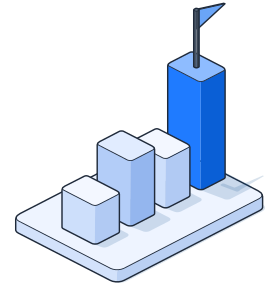
You leave withA clear read on what to keep, what to fix and what to scale, wave after wave.
Wisdom opens a better cycle.
New challenges surface, and that’s a sign of progress. Each loop begins from a smarter kind of ignorance, with sharper questions and less guesswork.
The reward for good answers is better questions.
Where to join
You don’t have to start at the beginning.
Most clients join the cycle exactly where their decision sits. Pick the situation that sounds like your team right now.
ProblemSolutionEvaluation
Start in the Problem Cycle
What we do
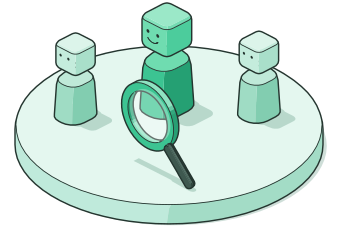
We map the reality before anyone designs anything: who is involved, what they do, what they say, and why the numbers look the way they do.
What you leave with
A problem defined with evidence, and the insights that should shape the decision.
We shape the options worth exploring and put them in front of your real audience, until one of them earns its place. For apps, websites and digital tools, we build working prototypes and test them round after round.
What you leave with
The option your audience backed, with the evidence to defend it in the boardroom.
The cycle is the journey. The H3™ Method is the engine.
At every step we fuse qualitative depth, quantitative scale and social listening into one triangulated answer. That’s what makes each turn of the cycle worth taking.
Something else on your mind? Ask us directly. You’ll get an answer from the people who would run the work.
01How long does a full cycle take?
It depends on the decision and its risk. A focused Problem Cycle can run in a few weeks; a full three-cycle project is a longer partnership. We scope it to the stakes, never to a template.
02Do we have to commit to all three cycles?
No. You enter wherever your decision is. Many projects are a single cycle and grow from there when the results earn it.
03How is this different from agile or design thinking?
We borrow their best instincts: divergence then convergence, and iteration over one big launch. The difference is the research underneath. Many teams iterate on assumptions, while we iterate on evidence from triangulated research.
04What is the difference between the Research Cycle and the H3 Method?
The Research Cycle is the journey over time. The H3 Method is what makes each step rigorous, fusing qualitative, quantitative and social listening into one answer.
05Can you build the product as well?
Up to a working prototype or beta. In the Solution Cycle we can build a version of the app, website or tool that people can actually use, test it with them round after round and hand over the one that holds up. Your team, or the partner you choose, builds the final product from there.
06Can you work continuously with our team?
Yes. The continuous model is built for exactly that. We can sit alongside your team across cycles, so the wisdom compounds instead of resetting.
Wherever you are in the cycle, let’s move you forward.
Tell us the decision you’re facing, and we’ll tell you which cycle you’re in and how we’d run it.
01You get in touchBy email, through the form or on a video call, whichever suits you.
02We ask for the briefEvery detail we need, so the proposal is shaped around what you actually require.
03We design the proposalThe approach that answers your objectives, with the timeline and the budget.
04Approval, and we beginYou sign off, the paperwork is settled, and the work starts.