
1,200
people across Spain, ages 18 to 55, weighted to the national profile. That’s enough to trust the patterns, but not to explain them.
Scroll through a market entry project and watch three research methods fuse into a single direction. This isn’t a gallery of charts; it’s how data should be visualised to reach its full potential.
Read this first
This is a simulated case study. The company, the 1,200 respondents, the 84,000 conversations and the 25 faces are illustrative, built by us to show how the H3™ method turns human signal into a decision. No client data appears on this page, and each method is shown in a simplified form, far lighter than a real study.
The brief
A Berlin-based personal finance app wanted to enter Spain. The question wasn’t how to launch, but whether to enter as they were, adapt their proposition or wait. Before designing anything, we measured the market they were about to walk into and ran a small soft launch in Spain, so we could see how people there lived with the app day to day.
Most firms would have fielded a quick survey and started designing screens. We did something far more certain. Before a single recommendation, we looked at the same question through three different lenses, because a market entry can often be broken by what you didn’t think to ask.
What follows is how the H3™ method turned scattered human signal into one direction the client could bet on.
*This brief is invented and deliberately simplified. A real project carries far more history, constraints and stakes than a few paragraphs can hold.


The H3™ method
Many firms pick one method and call it research. We look at the same question from every angle that matters, then fuse what each one sees into a decision.
01 | QuantitativeThe ScaleHow big is the opportunity, and how high is the wall? 1,200 people draw the terrain.Go to this part 02 | Social listeningThe UnfilteredWhat people post, comment and film when nobody is asking. The honest texture of a market.Go to this part 03 | QualitativeThe DepthThe why beneath the data. Twenty-five faces, in their own words, on video and voice.Go to this part  05 | Cultural adaptationThe ResultWhere the answer turns into a launch: product, message and campaign, reshaped for how Spain feels about money.Go to this part
Lens 01 | Quantitative
A representative survey across Spain, read with the soft launch’s usage data, gave us the shape of the opportunity and one figure that should have stopped a feature roadmap cold.
Hover or tap any person to hear them
73in100
In Spain, 73% of the people we surveyed wouldn’t trust a single app with their whole financial life, against 41% in Germany, the client’s home market. That isn’t a niche: it’s the majority of the market we were trying to win.
The same survey | Step by step
That 73% was the last number to reach us. Scroll through the four in the order they arrived, and watch the case for a quick launch fall apart.
Online panel across Spain, n = 1,200, weighted to the 18 to 55 national profile.
Simplified for the story. A real survey goes far deeper than four numbers: dozens of questions, segments and cross-tabs.
1,200
people across Spain, ages 18 to 55, weighted to the national profile. That’s enough to trust the patterns, but not to explain them.
41%
of the 1,200 in Spain put help with saving at the top of what they want from a finance app. On a pitch deck, this is the slide that tends to get a launch approved.
19%
of the same people actually pay for any finance app today. Saying you want help costs nothing, and the gap between these two numbers is where launches can fail.
73%
in Spain don’t trust a single app with their whole financial life, against 41% in Germany. A number like that should put a feature roadmap on hold until someone understands it.
| Survey question | Finding | Value |
|---|---|---|
| Sample | Adults across Spain, ages 18 to 55 | 1,200 people |
| Which features matter most to you in a finance app? | Rank help with saving as most important | 41% |
| Do you currently pay for any finance app? | Currently pay for any finance app | 19% |
| Do you trust one app with your entire financial life? | Do not trust a single app | 73% |
Lens 02 | Social listening
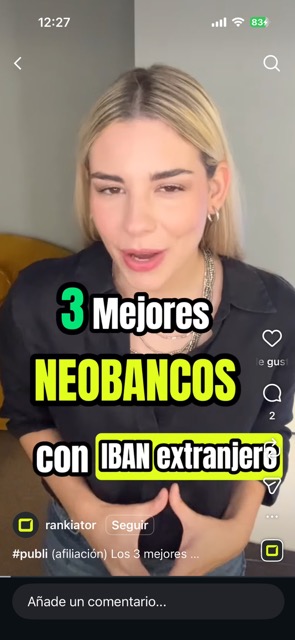
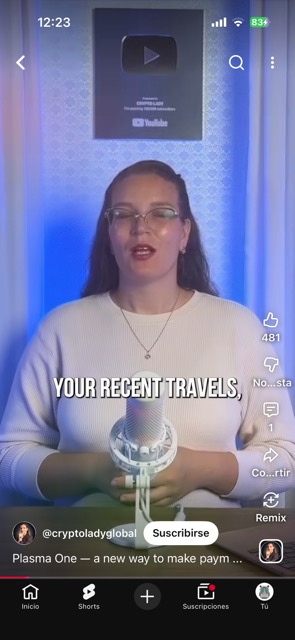
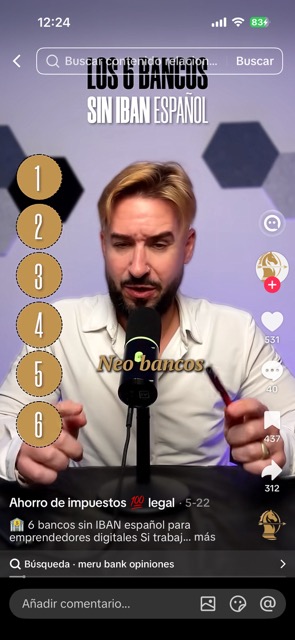
People post, film and comment the way they actually feel. We analysed 84,000 public signals about the apps already fighting for the Spanish wallet.
 Instagram
0:36
 YouTube
1:24
 TikTok
0:27
 LinkedIn
1:02
 Instagram
0:18
 YouTube
0:48
 TikTok
0:31
 LinkedIn
0:54
 Instagram
0:42
 YouTube
1:11
 TikTok
0:23
 LinkedIn
1:35
Two markets, two arguments
Sentiment, volume and reach of the Spanish conversation over three months. Hover or tap any region, line or source for the detail.
Simulated analysis
Sentiment
How the category is talked about (hover or tap)
Mentions over time
Last 3 months (hover or tap the line)
Where the conversation happens in Spain
By autonomous community (hover or tap a region)
Where we found it
Share of conversation by source (of 100%)
Lens 03 | Qualitative
Twenty-five in-depth sessions, with people walking us through the finance apps they already live with. By the third, the wall had a texture: shame, and the dignity people build to hide it.
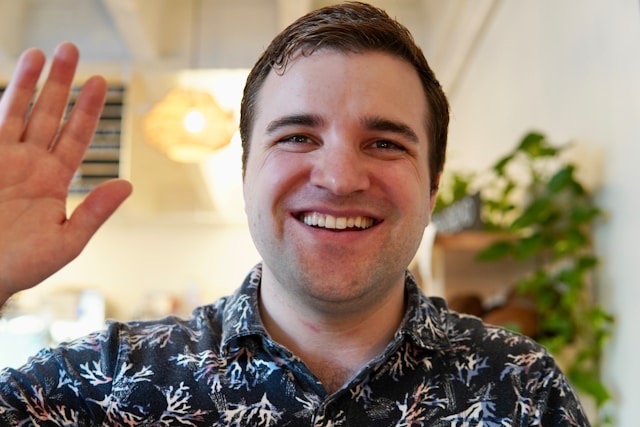
I hide my account from my own partner. Why would I open it to an app?
Javier, 41 | ValenciaThe language of money
How often each idea came up across 25 transcripts, coded by meaning: how the apps made people feel, and what they asked for instead.
Counted by meaning, not just the word. Hover or tap any word for the voices behind it.
*In the client’s home-market transcripts, the same blunt tone was coded as klar and ehrlich, clear and honest. Only in Spain did those words curdle into shame.
The emotional journey
Shame shows up in two specific moments. We mapped the emotional line across a normal month of use, and the same dip appeared in session after session.
*Mapped in the home market, the same emotional line barely moves: participants in Berlin took those moments as useful honesty.
The client’s app | First contact
We showed the same alert from the client’s app to a participant in Madrid and one in Berlin. The pixels were identical, and the whole market entry sits in the gap between their reactions.
04 | The fusion
A survey of 1,200 people and the soft launch found where trust breaks, 84,000 signals measured the feeling and 25 conversations explained why. Alone, each is a clue; together, they’re evidence.
The scale. In the soft launch, cancellations concentrate in one moment: the week the spending alert goes out.
The reason. The alert reads as a verdict on the person, and trust leaves with it.
Three lenses caught the same moment from three sides. What follows is the fusion.
H3™ triangulation
Every method has a blind spot. The survey shows where the damage happens, the listening how loud it feels, the interviews why. Tap each lens to read what it captured, then fuse them.
Each lens caught a different face of the same moment. Tap each one to read its finding, then tap H3™ to fuse them.
Cancellations cluster in a single week, the one that follows the first spending alert. The soft-launch data locates the break with precision.
62% of soft-launch users who cancelled left within days of an overspend alert.
The conversation runs hot: half of it is negative, six in ten posts carry an emotional charge, and the sharpest spikes gather around alerts and the feeling of being watched.
In the room, the alert reads as a verdict on the person. Several participants hide their balance from their own partners and brace for any app that might scold them. What they’re protecting is their dignity.
“It’s just a bank telling me I failed. Again.”
Trust breaks at the spending alert, and the remedy is emotional: the product has to feel like help without judgement, starting with the alert that announces a bad month.
The where, the how loud and the why land on the same moment, and that agreement is the evidence.
Fusion, not combination
Here’s the uncomfortable test we run on our own work: read the same project with one lens, then two, then all three. Only the third turns it into an instruction you can defend in a boardroom.
In the soft launch, cancellations spike the week the overspend alert lands. Read alone, the data points at the interface: soften the red, reword the banner, ship it.
A patch on the wrong layerThe listening adds temperature: the spike is wrapped in anger, sarcasm and shame, so the trouble sits deeper than a screen. The team now knows something real, but still has nothing to build.
Closer, but no instructionThe rooms name what the numbers and the noise could only point at: the alert reads as a verdict, and dignity decides. Now the fix is concrete: rebuild the moments that judge, starting with the alert, and let trust arrive slowly, in private.
The instructionH3™ | The answer
The product that wins at home was built on bluntness, full visibility and control. The version that wins in Madrid leads with calm, asks for less on day one and keeps a person’s numbers private.
Open with the numbers, all of them.
Connect every account on day one.
Say it straight, in red if it has to be.
Open with calm, one step at a time.
Earn access slowly, one account first.
Say it kindly, and say it in private.
Strip away the privacy talk and you reach what people are really guarding: their dignity. They keep their money out of sight because the numbers feel like proof they’ve failed, and they brace for any app that might say it to their face. So the fix is emotional: every screen has to earn its way in by feeling like quiet help with the judgement taken out, starting with the alert that announces a bad month. That alert doesn’t travel well. In Berlin, bluntness reads as respect, a product that takes you seriously. Carry the same words to Madrid, where many people already feel their banks are keeping score, and they land like a verdict.
The fused answer | H3™
05 | The result
Research earns its keep in the weeks after the report lands. Here, four findings become four decisions. The numbers are illustrative, but the logic is the one we use on real projects.
The overspend banner was redrawn from scratch: calm colour, plain words, and the way out placed right next to the number.
BeforeA red banner. Minus 240 euros, you overspent this month.
AfterA calm line. 60 euros left and four days to go, you’re on track.
The first session connects a single account. The rest get invited later, once the product has earned it.
BeforeConnect every account at signup.
AfterOne account to start, the rest when trust has grown.
Discreet mode ships switched on. Balances hide with one tap, and privacy leads the launch campaign.
BeforeBalances visible on the home screen.
AfterNumbers stay hidden until you choose to show them.
Every message in the money journey was rewritten in a person’s tone, the overspend message first.
BeforeYou have exceeded your monthly budget.
AfterA tight month happens. Here’s where it went.
The adaptation
Traceability is the luxury of good research: every change in this entry strategy points back to something a person actually said. Flip the screen to compare the Berlin and Madrid versions.
Budget exceeded. Review your spending.
A tight month happens. Here’s where it went.
The minus sign leads the screen.
You overspent, delivered flat.
The screen ends at the bad news.
What remains leads, 60 euros still yours.
On track, said like a person would.
The way out sits next to the number.
The payoff
We put both versions in front of the same Spanish panel. The figures are illustrative, and each one moved for a reason a person told us.
The default opens by asking to connect everything, the exact wall the interviews kept hitting. The adaptation starts with a single account, so far more people simply make it inside.
In testing, the old alert was the single biggest exit, the moment people described as a verdict. Redrawn as quiet help with the way out next to the number, it keeps nine people in ten past the hardest moment of the month.
People talk about what makes them feel steady. With privacy leading and a voice that speaks like a person, the product became safe to bring up over dinner.
The rooms were clear that trust in money apps grows slowly. A product that earns access step by step is still around when month three arrives.
Four numbers, one pattern: the product stopped bruising people at the moments that matter. This launch was a simulation, built so the method could show its work.
The bets on your desk are real.
Straight answers
Something else on your mind? Ask us directly. You’ll get an answer from the people who would run the work.
It’s the work of turning research evidence into a narrative a decision-maker can follow and act on: what we found, why it matters and what to do about it. Charts and dashboards are part of it, and each one has to earn its place by moving the reader closer to the decision at the end.
No. The company, the figures and the people on this page are illustrative, built to show how the H3™ method works from brief to launch. The method, the deliverables and the way we reason are the ones we use with clients, whose data we never publish.
Each method has a blind spot. A survey sizes a problem without explaining it, social listening shows how people talk when nobody is asking, and interviews reveal the reasons behind both. When the three point at the same moment, a recommendation becomes evidence you can defend in front of a board.
The H3™ Intelligence Report and the formats your teams need to act on it: navigable PDFs, dashboards, workshops, documentaries and a private hub that keeps every file of the study in one place. You can see all nine formats, and what each one is for, on the Reporting Ecosystem page.
A study like this usually runs between six and twelve weeks, from the research design to the session where we make sense of the findings with your team. Every project is scoped on its own terms, and the proposal you receive shows the timeline before anything starts.
Tell us which market entry you’re weighing, and we’ll tell you what we’d test, how long it would take and whether H3™ fits your bet.
Why blue to green
From ignorance to wisdom
01 | The sky
Hypotheses, hunches and assumptions that nobody has tested yet.
What we do here
“Our customers would never pay for that.”
02 | The descent
Data you already own: scattered, unread, or contradicting itself.
What we do here
“We have three studies on this, and they disagree.”
03 | The ground
Evidence you can act on and defend in front of the board.
What we do here
“We know why it happens, and we can prove it.”
Our research is the gravity that pulls an idea out of the sky and plants it in the ground.
Walk the Research Cycle
The conversation, unfiltered
Simulated public comments
Otra app de finanzas que parece un banco con otro logo. Paso.
Another finance app that looks like a bank with a different logo. Pass.
Las comisiones escondidas son lo peor. Te enteras cuando ya es tarde.
Hidden fees are the worst. You only find out when it’s too late.
No le doy acceso a toda mi cuenta a una app. Ni de broma.
I’m not giving an app access to my whole account. Not a chance.
Probé tres y al final volví a mi banco de siempre. Triste pero real.
Tried three and ended up back at my usual bank. Sad but true.
Me da vergüenza hasta abrir la app y ver cuánto gasto, en serio.
I’m too embarrassed to even open the app and see how much I spend. Seriously.
El onboarding pidiéndome todo el primer día. Cerré y desinstalé.
Onboarding asked for everything on day one. I closed it and uninstalled.
Si tengo que leerme cuatro pantallas de letra pequeña, ya no me fío.
If I have to read four screens of small print, I don’t trust it any more.
Reparto el dinero en varias apps a propósito. Un solo punto de fallo, no gracias.
I spread my money across several apps on purpose. A single point of failure? No thanks.
Mi madre no se fía y la entiendo. Demasiado banco, poca persona.
My mum doesn’t trust it and I get it. Too much bank, not enough human.
Te prometen sin comisiones y luego, zas, comisión por respirar.
They promise no fees and then, bam, a fee for breathing.
Quiero ahorrar, no que me juzguen cada vez que me paso.
I want to save, not be judged every time I overspend.
Lo de meter toda mi vida financiera en un solo sitio me supera.
Putting my whole financial life in one place is too much for me.
Demasiadas apps quieren ser mi banco. Yo solo quiero llegar a fin de mes.
Too many apps want to be my bank. I just want to make it to the end of the month.
Para invertir uso una, para el día a día otra. Mezclarlo me da mal rollo.
One app for investing, another for everyday spending. Mixing them gives me bad vibes.
La de comisiones que me han colado sin avisar. Aprendí a leerlo todo.
All the fees they’ve slipped in without telling me. I learnt to read everything.
Confianza no se gana pidiendo el DNI y el primer sueldo de golpe.
You don’t earn trust by asking for my ID and my first salary all at once.
No es la app, es que el dinero me da ansiedad. Y esta no ayuda.
It’s not the app, money just makes me anxious. And this one doesn’t help.
Mi banco de siempre será caro, pero al menos sé dónde reclamar.
My usual bank may be expensive, but at least I know where to complain.
Cada app te pide confiar a ciegas. Yo ya no confío a ciegas en nadie.
Every app asks you to trust it blindly. I don’t trust anyone blindly any more.
Me encanta el diseño y luego me clavan tres euros por sacar dinero.
I love the design, then they sting me for three euros to take cash out.
Separo cuentas como separo problemas. Cada cosa en su sitio.
I separate accounts the way I separate problems. Everything in its place.
Un neobanco no es un broker, dejad de venderlo como si lo fuera.
A neobank isn’t a broker. Stop selling it as if it were.
Lo que me echa para atrás no es la app, es sentir que me vigilan.
What puts me off isn’t the app, it’s feeling watched.
Me bajé la app, vi la pantalla de permisos y me asusté un poco.
Downloaded the app, saw the permissions screen and got a bit scared.
Si parece un banco y cobra como un banco, es un banco.
If it looks like a bank and charges like a bank, it’s a bank.