Many firms combine methods. We fuse them, cross-checking every finding across all three lenses.
It answers What is actually true, and how confident can we be?
How the fusion worksCustomer & Human Insight
Product, pricing and messaging all rest on one picture of the customer, and that picture is often a survey people answered politely plus a segmentation from three years ago. People aren’t lying, they just can’t see their own habits from the inside. We watch what they do, listen to what they say when nobody is asking, and measure how much of it holds.
What’s at stake
Depth is what keeps it standing.
Our lens
Habits are often invisible to the people who have them. Someone will describe a careful comparison before buying, and mean it, while the receipt shows they reached for the same brand they always do. Memory tidies things up, and the tidy version is the one that ends up in your survey data. That’s where our H3™ method earns its place: three lenses, fused into a single reading you can act on.
Many firms combine methods. We fuse them, cross-checking every finding across all three lenses.
It answers What is actually true, and how confident can we be?
How the fusion worksWhat we do
Each one answers a different question, from understanding a market of people for the first time to choosing which group to serve first.
Customer & Human Insight | 01 of 05
Research that goes past what customers report about themselves to how they really live, choose and buy, so the decisions you make about them rest on evidence.
People aren’t built to observe themselves. They report the version of their behaviour that makes sense in hindsight, and it’s usually tidier than what happened.
We work from what people do, what they say to each other when nobody is asking, and what the numbers confirm across the market, so the picture is one you can put a budget behind.
Buying from brands that stand for something
65% said they want to 26% actually do
White, Habib and Hardisty, Harvard Business Review, 2019
Reading the privacy policy before agreeing to it
97% agreed to it 26% even opened it
Obar and Oeldorf-Hirsch, Information Communication and Society, 2020. n=543. Those who opened it spent 73 seconds on a text that takes about 30 minutes to read.
Checking the calories on a food label
33% said almost always 9% actually did
Graham and Jeffery, Journal of the American Dietetic Association, 2011. Eye tracking, n=203.
Checking the sugar content on a food label
24% said almost always 1% actually did
Graham and Jeffery, Journal of the American Dietetic Association, 2011. Same study.
When researchers stopped asking and started measuring, people who said diets didn’t work for them turned out to have underreported what they ate by 47% and overreported their exercise by 51%. Every metabolic test came back normal. They weren’t lying, they were remembering.
Lichtman et al., New England Journal of Medicine, 1992
Tick the ones that sound familiar.
Two or more sound familiar? That’s usually where our first conversation starts. Tell us the decision you’re facing
Customer & Human Insight | 02 of 05
Research where your customers live, shop and use your product, so you see the reasons behind a habit that nobody mentions in an interview.
A product that reads as a treat in a focus group can turn out to live at the back of a cupboard. The explanation is in the kitchen, not in the transcript.
We run fieldwork in the places where the habit or the decision actually happens, in the local language, with local recruiters and moderated by our own seniors.
The journey in the deckFour steps, drawn from a survey and a funnel report.
Household 1. A couple in a small flatNine weeks from the first drip to a delivery van.
Household 2. A retired coupleForty minutes from start to finish, and no website opened.
Household 3. A new parentOne phone call decided it.
Four steps in order, each one following from the last. This is the journey a typical funnel describes, and probably the one your team is designing against.
Three households, three journeys, and their average describes none of them. That’s why a single funnel can be wrong for most of your market.
Tick the ones that sound familiar.
Two or more sound familiar? That’s usually where our first conversation starts. Tell us the decision you’re facing
Customer & Human Insight | 03 of 05
A segmentation your teams can act on, built from motivation as well as demographics, so you know who to serve first and what to say to them.
Groups built from age and income are easy to measure and say almost nothing about motivation. That’s how a neat segmentation chart ends up in a drawer.
We segment on what drives people, size each group against the market and hand you personas your product and marketing teams can use on a Monday morning.
Four boxes anyone can measure and report, and none of them tells you what to say to a single person inside.
Tick the ones that sound familiar.
Two or more sound familiar? That’s usually where our first conversation starts. Tell us the decision you’re facing
Customer & Human Insight | 04 of 05
Research with everyone involved in a business purchase, including the people who never talk to you, so you can win over the whole buying committee, not only your champion.
A B2B decision is made by a group, and most of that group never speaks to you. Gartner puts the typical buying committee at six to ten people.
We research the whole room: who influences, who blocks, who signs, and what each of them is afraid of getting wrong.
You interviewed one of them. Seven other people were also deciding, and any of them can stop the deal on their own.
Your champion
What they want
What they fear
What makes them say no
Tick the ones that sound familiar.
Two or more sound familiar? That’s usually where our first conversation starts. Tell us the decision you’re facing
Customer & Human Insight | 05 of 05
Research into the progress your customers are trying to make when they buy, so you know who you’re really competing with and what to build next.
Every purchase is someone hiring a product to get a job done. Once you know the job, the competition changes, and it rarely matches your market share deck.
We run switch interviews to rebuild the moment somebody changed their mind, then measure how common that moment is across the market.
A 31% share of the project management category is 6% of everything teams hired for this job. The option hired most is a spreadsheet somebody maintains by hand, and nobody has a sales team pointed at it.
Seven per cent hired nothing. In Jobs-to-be-Done that’s called non-consumption, and it’s often a cheap place to grow, because nobody is defending it.
Tick the ones that sound familiar.
Two or more sound familiar? That’s usually where our first conversation starts. Tell us the decision you’re facing
How the work runs
A recommendation is only as trustworthy as the work behind it. These are the foundations ours runs on, each with its own page.
Who runs your project
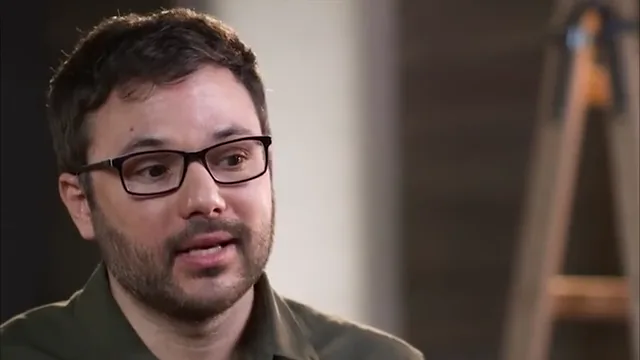
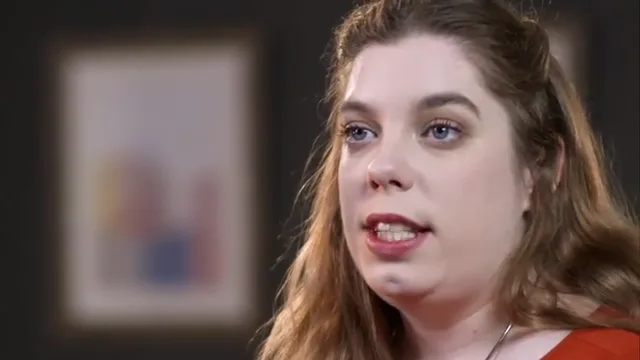
Boutique has a practical meaning here: Abdo López and Norah Walsh, both social anthropologists, work on every project, and nothing is handed to juniors once the contract is signed.
“The riskiest assumptions are the ones everyone in the room already agrees on. Our job is to find out whether they’re true before you bet on them.”
Insights
Written by the people who run this work, from what happened in real projects.
 Customer Insight| H3 in the Open
 Norah Walsh7 min readCustomer Insight| Buying ResearchNorah Walsh7 min readCustomer Insight
 Abdo López7 min read
Where this connects
Once you can describe the person properly, the next questions arrive on their own: what to build for them, where to serve them, and what your brand needs to mean.
On your business model
 Innovation & Product IntelligenceBuild what people actually want, validate before you scale.
Straight answers
Something else on your mind? Ask us directly. You’ll get an answer from the people who would run the work.
Often because they describe who people are and not what they’re trying to do. A persona built from age, income and a stock photo can’t tell a product manager which feature to build or a writer which sentence to open with, so it gets read once and filed. We build the groups on motivation, size each one against the real market so the choice has a number behind it, and write the personas in the language each team actually works in: what this group is trying to get done, what stops them, what they need to see before they act, and how to recognise them inside your own data from then on.
Every quote is built for the project, because the variables move a great deal. How many markets and languages, how many participants, whether the work is qualitative depth or a segmentation that has to be sized quantitatively across the market, how hard the audience is to reach, which is very different for general consumers than for a B2B buying committee, whether there is fieldwork in homes and shops, and what you need in your hands at the end. A round of depth interviews in one market and a segmentation sized across four are different projects with very different numbers. Most of our projects sit in the six-figure range. We scope after a proper conversation about the decision you’re making, and you get a fixed price and a timeline before any work begins.
Your data is very good at what happened and who did it, but it’s silent on why, because people rarely record a reason when they buy something. That gap is where expensive mistakes tend to live: two teams read the same dashboard and reach opposite conclusions, and both can defend the number. We start from the data you already have, show you what it can and can’t answer, and then go and get the part that’s missing, from the people themselves. At the end you also get a way to recognise each group inside your own systems, so the investment keeps working after we leave.
Most of the time people aren’t holding anything back; they simply can’t see their own habits from the inside, so what you get in a survey is the tidy version they can recall and justify. We work from three directions at once, starting with behaviour where it happens, in the kitchen or the shop or the office, because that’s where the real requirement surfaces. We also read what people say to each other when nobody is asking them anything, and we measure how common each pattern is, so a striking observation doesn’t become a strategy on its own. The uncomfortable answers tend to arrive in the second hour of fieldwork, not in the first ten minutes.
Yes, and that’s the part of the work worth paying for. A list of groups is a description. A recommendation is a decision, and it needs four things behind it: how many people are in each group, what they’re worth, how reachable they are, and how much of each one you already have. We size the segments quantitatively so the choice arrives with a number rather than an opinion, and we say plainly which group to go after first and why that one. You’re free to disagree with the recommendation, and you’ll be able to see exactly what it rests on.
However many your company can genuinely act on differently, which is usually fewer than the model can produce. The test is simple: if marketing can’t write differently for two groups, product can’t build differently for them and sales can’t sell differently to them, then for your purposes they’re one group. Statistics will happily support seven groups, but organisations rarely can. In our experience, the segmentations that survive contact with a real company tend to have three to five groups, with one of them clearly named as the priority. We’d rather hand you four segments your teams use every week than eight that describe the market beautifully and change nothing.
Both, and the connection between them is what the firm is built on. We call it insight-led strategic intelligence because research earns its cost when it makes the strategy sound. In this category that means you get the evidence and what to do with it: which group to serve first and what that changes about the roadmap, what people are actually hiring your product to do, where the message has to start because the belief underneath it is not there yet, and which beliefs inside your own company the evidence does not support. The point is that your company loses less time and money going in the wrong direction.
Abdo López and Norah Walsh lead every project in person, from the framing session to the final reading, and everyone working alongside them is senior with more than a decade in the field. Around that core we build the team for the project. The right moderator for a home visit in Mexico is not the right one for Germany, and the specialist who runs the segmentation model is not the one who sits in somebody’s kitchen for two hours, so we select the experts, the partners and the technology that fit the question, the technique, the country and the industry. There’s no handover to a junior once the contract is signed, and that’s the main reason we stay small.
Tell us the decision you’re carrying: a segmentation nobody uses, or a deal that died late for no clear reason. You get a fixed price and a timeline before anything starts.