
B2B market research
B2B market research when six roles decide and you only hear from one.
Business customers are few, busy and hard to reach, and most of the roles that decide never talk to your sales team. We interview people in each of those roles across your market, so you know how companies like your customers buy: who usually influences, who blocks, who signs, and what each role needs to see.
- Decision-makers, recruited one by one
- Senior researchers in every interview
- H3™ method
The champion | Pushes the deal“Can I defend this internally?”
The user | Influences“Will this make my day easier or harder?”
The budget holder | Signs“What do we stop paying for?”
IT and security | Can block“What could this break?”
Procurement | Can block“Why this supplier, at this price?”
The boss | Signs off“Why now?”
We hear each role across many companies in your market, never inside one account.
What’s at stake
In the pipeline review, every deal sounds like it’s closing.
- “Our champion loves it.”One voice out of six
- “Budget is approved.”Finance never saw it
- “IT will sign it off.”A risk nobody raised
- “Procurement is a formality.”Three more quotes
- “It closes this quarter.”Lost to doing nothing
Knowing how your market buys is what keeps it standing
The basics
What is B2B market research?
B2B market research studies the kind of companies you sell to and the roles that decide in them: what they need, how they buy, who takes part and why they choose one supplier over another.
You’ll also see it called B2B customer research. The questions are the same as in consumer research: who the customers are, what they want and what they’d pay. What changes is how you answer them. There may be only a few hundred companies in your market, the person you need has a full diary and a gatekeeper, and the decision is shared between people who want different things.
That’s why B2B work leans on fewer, longer and better-prepared conversations, and why a sample that would look small in a consumer survey can be sound here.
The subject is always the market. We hear each role across many companies in your sector, and we don’t investigate one named company or tell you who’s who inside it.
What B2B research usually has to answer
Market size and segmentsHow many companies could buy, and which ones to go after first.
The buying groupWhich roles usually take part in a decision like this, and which can stop it.
Needs and triggersWhat problem they’re solving, and what makes them start looking.
Why suppliers win and loseWhat tips the decision in your category, told by people who have just made one.
Price and valueWhat they compare your price with, and what they think they’re paying for.
Satisfaction and churnHow your customers feel as a group, and what makes an account leave.
For the buying group in depth, see B2B decision-maker research.
What changes in B2B
Five things that make B2B research harder than consumer research
None of them is a reason to skip the research. Each one changes how the study has to be designed.
- Illustrative example2,000people in a consumer survey, answered by Friday400companies in your whole market. 24 agree to talk
The market is small
Why this is a challengeA consumer brand can survey 2,000 people by Friday. Your market may be 400 companies, and every interview you waste is one you can’t replace.
This is what we doWe map the market first and treat every respondent as scarce: fewer conversations, better chosen and better prepared.
- Illustrative example
- Invited120
- Replied34
- Role verified16
- Interviewed14
Finance directors invited to a 45-minute interview. The people who reply first are not always the ones who decide.
The right people are hard to reach
Why this is a challengeA finance director doesn’t join a panel for a voucher. The people who answer easily are often not the people who decide.
This is what we doWe recruit one by one and check each person’s real role before the conversation starts.
- Illustrative example
- ChampionPushes
- UserInfluences
- BudgetSigns
- ITCan block
- ProcurementCan block
- BossSigns off
Nobody decides alone
Why this is a challengeGartner puts the typical buying committee at six to ten people. Each one wants something different, and the one who can say no is rarely in the meeting.
This is what we doWe interview each role across many companies in your market, including the roles your sales team rarely meets.
- Illustrative example
The falling line is what buyers still remember about why they chose.
The buying cycle is long
Why this is a challengeA deal can take a year. By the time it closes or dies, everyone remembers a different story, and the CRM field just says “price”.
This is what we doWe recruit people across your market who made this kind of decision in the last few months, while they still remember what tipped it.
- Illustrative example
- Head of operationsDescribed last year’s tender in detailVerified
- Purchasing directorCouldn’t say who approves a purchaseRemoved
- IT security leadNamed the audit their team runsVerified
- Finance directorExplained how budget gets releasedVerified
Screening question: “Walk me through the last purchase your team approved.”
Online panels get risky
Why this is a challengeSome people claim a job title to earn the incentive. In a small sample, one invented purchasing director can move the result.
This is what we doWe screen with questions only a real practitioner can answer, and remove anyone who can’t.
The H3™ method in B2B
Three lenses, adapted to people with no time
Interviews, social listening and a survey, designed around one question and read together. In B2B, each lens is run differently.
 QualitativeHuman StoriesOne-to-one interviews with decision-makers and users from companies across your market, run by a senior researcher who has studied your sector first.
 Social listeningHeartbeatWhat buyers say about your category on LinkedIn, Reddit, review sites and trade forums, when no supplier is in the room.
 QuantitativeHard EvidenceSurveys sized against the real market: if 400 companies could buy, 80 well-screened answers can tell you more than 800 doubtful ones.
Where your question sits
B2B runs through all eight areas of our work
B2B is a kind of customer, so it shows up in every decision. These are the questions business clients bring to each area.
 Which markets and segments should we enter first?Growth & Market Strategy
 Will buyers pay for this feature, or only say they like it?Innovation & Product Intelligence
 What do we stand for when every supplier says the same thing?Brand & Cultural Strategy
 Which message works for the finance director, and which for the user?Advertising & Communications
 Which roles take part in a purchase like ours, and what does each one need?Customer & Human Insight
 Where does onboarding lose the accounts we worked so hard to win?Experience & Service Design
 What will our customers’ customers want in three years?Foresight & Trend Intelligence
 What do partners, regulators and future hires think of us?Reputation, Organisation & Impact
B2B research in practice
Finom: what entrepreneurs need from a business bank
Finom builds business banking for freelancers and small companies across Europe. Before a rebrand went further, it wanted to hear from the people it was designing for.
This is the small-business end of B2B, where the user, the buyer and the person who signs are often the same entrepreneur.
Read the Finom case study 24in-depth interviews in Germany and France2markets, with mirrored samples4profiles, from solo entrepreneurs to startup investors“Their deep user insights and powerful analysis enabled our team to refine our strategy and strengthen our visual identity.”Ivan Sivokhin | CMO, Finom
How we work
Evidence that holds up when someone asks how you know
Senior people on every project, every respondent checked, a second senior review and a written stance on AI. The standards are public, so you can hold us to them.
Who runs your project
Senior anthropologists on the work, from the first question to the final reading.
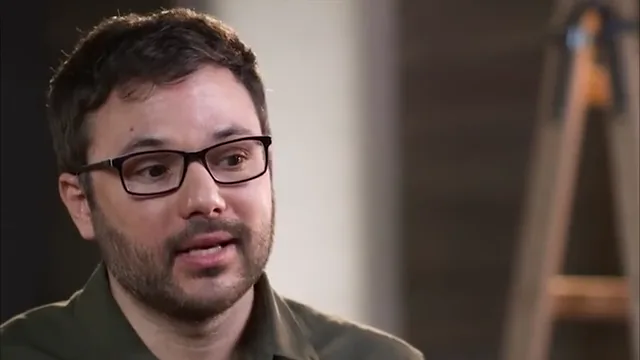
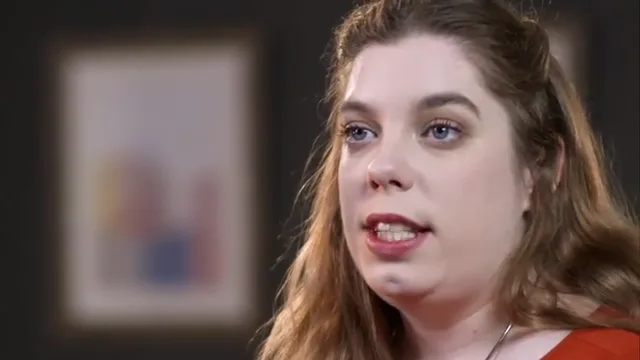
Boutique has a practical meaning here: Abdo López and Norah Walsh, both social anthropologists, work on every project, and nothing is handed to juniors once the contract is signed.
- 2017
- Founded in Asturias, Spain
- 25
- Countries with local fieldwork
- 38,000+
- Participants in our studies
- 100,000+
- LinkedIn Learning learners
“The riskiest assumptions are the ones everyone in the room already agrees on. Our job is to find out whether they’re true before you bet on them.”
Straight answers
Questions we get about B2B market research
Something else on your mind? Ask us directly. You’ll get an answer from the people who would run the work.
What’s the difference between B2B and B2C market research?
The questions are similar and the conditions are very different. In B2C you can reach thousands of buyers quickly, and each one decides for themselves. In B2B there are fewer buyers, they’re harder to reach, the purchase is larger and several people share the decision. That pushes B2B research towards longer interviews, smaller and more carefully built samples, and more attention to who holds which role.
How do you reach senior decision-makers?
One by one. We start from a definition of exactly who we need, by role, company size and sector, and recruit through specialist B2B recruiters, professional networks and referrals. Every participant is screened on their real responsibilities before the interview, and the incentive is set at a level a senior person takes seriously. Where it helps, your own customers are part of the sample, approached in the way you agree with us.
How many interviews or survey responses do you need in B2B?
Fewer than in consumer work, and it depends on how varied your buyers are. For interviews, 15 to 30 across the roles and segments that matter is a common range. A survey is judged against the size of the real market: if 500 companies could buy, 100 well-screened responses is a fifth of all your possible customers. We explain the reasoning in the proposal, so you can defend the number internally.
Can you research one specific company we want to sell to?
No, and we’d rather say so up front. We don’t investigate a named company or map who’s who inside it. We study your market: people who hold these roles, such as finance directors, IT leads and procurement managers, across many companies in your sector. You learn how each role tends to think, what it needs to see and where decisions usually stall. What participants tell us is reported without naming them or their employer.
Can you interview our own customers?
Yes, when there are enough of them to study as a group. That goes for consumers, for the users of a digital product and for business customers. We agree with you how they’re approached, and what they tell us is reported for the group, without naming who said what. With only a handful of accounts there isn’t a market to research, and a conversation between your team and each customer will tell you more.
How do we choose between B2B market research companies?
Look at three things. First, who does the interviews: a senior researcher can hold a conversation with a finance director, and a junior with a script usually can’t. Second, how they recruit and screen, because in B2B a few fake respondents can ruin a small sample. Third, whether you get a recommendation or a pile of transcripts. Ask each B2B market research agency on your list to show you one finished report.
What does a B2B market research project cost?
It depends on how many markets, roles and lenses the question needs, and on how hard the people are to reach, which is the main cost in B2B. Most of our projects are six-figure investments. You get a fixed price and a timeline before any work starts.
Before the next deal stalls, learn how your market really buys
Tell us what you sell and who you sell it to. You get a fixed price and a timeline before anything starts, and a straight answer if research isn’t what you need yet.
- You get in touchBy email, through the form or on a video call, whichever suits you.
- We ask for the briefEvery detail we need, so the proposal is shaped around what you actually require.
- We design the proposalThe approach that answers your objectives, with the timeline and the budget.
- Approval, and we beginYou sign off, the paperwork is settled, and the work starts.
- Senior researchers only. No juniors.
- End to end. Design, fieldwork, reporting.
- No AI automation. Any use, disclosed.