
Skip to content
Start a conversation

Human StoriesThe qualitative lens of the H3™ method

Qualitative research, led by social anthropologists

We are social anthropologists. We sit in kitchens, walk the aisles and read between the lines of everyday life to understand why people do what they do, and what it means for the decision on your desk.

Shopalong fieldwork: a shopper weighing a purchase in a store aisle, her hand on a box, her eyes on the top shelf

Fieldnote | Tue 7 Jul | 09:12

She checks the price twice, says nothing, and puts it back.

Why qualitative

To make the big decisions, you have to know who you’re deciding for.

Before a launch, a new product or a market entry, the riskiest thing you can do is guess what people want. Qualitative research shows you the why behind the numbers.

01

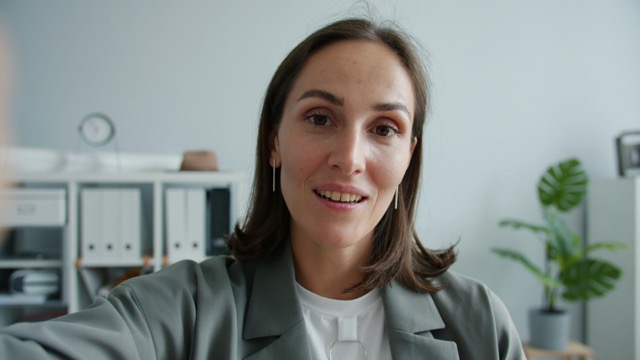
We see their face

The person behind the data point, finally in focus

A spreadsheet flattens a human being into a row, so we sit across from them instead and meet the person a survey can’t capture.

The pause before the answer

The hesitation and doubt that rarely reach a questionnaire.

The contradictions

What people say against what they actually do.

The workarounds

The little fixes people invent and never mention.

What you gain: an audience you can picture, so every decision about your product or message is aimed at a real person rather than a demographic guess.
02

We hear their voice

The reasons people give when no one is selling to them

People rarely say what they mean in a tick box, but given time and their own words, they tell you the real story behind the choice.

Their own language

The words and metaphors your customers actually use.

The real objection

What worried them, and what almost stopped them.

The throwaway line

The aside that turns out to be the whole point.

What you gain: the real motivations and objections in your customers’ own words, so your positioning speaks their language instead of yours.

03

We walk beside their life

The full world your product has to fit into

A choice doesn’t happen in a vacuum: it sits inside a whole life, and that life usually decides whether your product earns a place.

Habits and budgets

The everyday routines and limits your offer lives within.

Their circle

The people they answer to, trust and want to impress.

Fears and dreams

The private ambitions and worries driving the decision.

What you gain: the lived context around the decision, so you can design an offer that fits into real lives rather than fighting against them.

Depth isn’t a nice-to-have. It’s how you stop guessing.

When you know your customer this well, the expensive decisions get easier. You tune your product, your message and your strategy to people you genuinely understand, so a launch is built on evidence rather than hope. That’s the advantage qualitative gives you, and the foundation the H3™ method then sharpens with quantitative proof and social listening.

See it for yourself

Your customer, in their own words and images.

Qualitative can sound abstract until you see what lands on your desk: real people on screen, their voices and the words they used, mapped and made sense of, ready for the room that has to decide.

Interview and ethnography clipsIllustrative example

Watch your customer explain themselves, in their own room, in their own words.

Interview 07 | Madrid | Home visit

“I’ve meant to switch for years. It’s moving the direct debits that puts me off.”

21:33 | 34:12

Each clip is cut from the full recording and tagged with the codes from the analysis, so you can find every moment about the same theme.

Hover or tap a code on the timeline to jump to that moment.

Also on your desk, depending on the project

  • Verbatims that landThe one sentence that reframes how the whole team sees the problem.
  • Language frequency mapsThe words your market really uses, ranked by how often they surface.
  • Perceptual maps and matricesWhere your brand sits in people’s minds, against everyone else.
  • Field documentariesA short film that puts your team in the room where it happens.
  • Digital behaviour capturesHow people actually move through your product, screen by screen.
  • Thematic coding systemsThe rigorous structure underneath every claim we bring you.
  • Evidence-based personasArchetypes built from real people, not from a workshop guess.
  • Cultural artefact wallsThe objects, packaging and spaces that carry meaning in your category.

The say-do gap

People say one thing and do another

Researchers call it the say-do gap: the distance between what people say and what they do when nobody’s asking. That’s why we anchor every project in observed behaviour.

What she saidInterview | Tue 7 Jul | 08:47

“Price decides everything for me. I always compare before I buy.”

The path she described

  1. Compares prices
  2. Picks the cheapest
  3. Buys it

What she did | Fieldnotes | Tue 7 Jul

She said price decides. In the shop, a WhatsApp to her husband decided, and she left without it.

The anthropological gaze

We don’t just collect opinions. We read culture.

We are social anthropologists, and our craft is built to see the meaning underneath behaviour, the reasons people can’t always name themselves.

Habitus

Habitus

Much of what shapes a market never reaches a survey, because people aren’t aware they’re doing it.

Habitus is the deep grammar of everyday life: the routines, tastes and gestures we inherit and repeat on autopilot. It’s where real demand lives, and where declared preferences tend to fall apart. We reach it by being there, through immersions and accompaniments, watching the ordinary Tuesday rather than the answer people rehearse for a focus group.

In our fieldwork

Category habitswhy a product is used the way it is, not the way its makers imagined

Immersions and accompanimentswe follow the routine in its own setting

What we bring to the fieldwork

Business anthropology

Business anthropology

The ground we stand on, and the root everything else is grafted onto.

It studies people as members of cultures, not as data points, and asks what their behaviour means rather than only counting it. For a business, that’s the difference between knowing that sales dropped and understanding the shift in values behind it. It’s the discipline that lets us hand you a decision, not just a chart.

The qualitative toolkit

The techniques are the easy part

Interviews, ethnography, diaries, communities: the whole qualitative toolkit. Filter by what you need to solve and see how we’d approach it.

Show techniques for

In-depth interviews

One person, one conversation, deep enough to reach what a questionnaire can’t.

Best whenyou need the full reasoning behind a decision, in the person’s own words

You getrich, quotable motivation you can build a strategy on

Ethnography

We go where life actually happens and watch what people do, not only what they say.

Best whenthe truth lives in behaviour people can’t put into words

You getthe unfiltered reality behind the survey answer

Shop-alongs

We walk the aisle with people and watch the decision unfold in real time.

Best whenthe moment of choice is where your question really lives

You getthe gap between the shopping list and the basket

Diary studies

People record their own lives over days or weeks, so we see the pattern, not the snapshot.

Best whenbehaviour changes with mood, time of day or context

You getthe real rhythm of use, not the tidy version

Focus groups

The right people in a room, where meaning gets built, challenged and revealed between them.

Best whenyou want to watch opinion form under social pressure

You getthe language and tensions a category is built on

Online communities

A living group we host over time, so insight deepens instead of ending with the session.

Best whenyou need to follow a question across weeks, not hours

You getevolving insight and a group you can return to

Contextual inquiry

We sit beside people while they use the thing, in the place they actually use it.

Best whenyou’re shaping a digital product and need the real workflow

You getthe friction users have stopped noticing themselves

Jobs-to-be-Done interviews

We uncover the job people are really hiring your product to do for them.

Best whenyou’re innovating and need the real motivation, not the feature wishlist

You getthe underlying need a whole category competes for

Usability testing

We watch real people meet your product and find the friction before your users do.

Best whenyou have a flow or prototype and need to know where it breaks

You getthe moments of confusion people rarely report

Digital ethnography

We study people where they now live much of their lives, online and in their own words.

Best whenthe conversation about your category is happening on screens

You getnative behaviour we can carry straight into social listening

Co-creation workshops

We build with people rather than for them, turning their world into your next move.

Best whenyou’re shaping a concept and want it grounded in real need

You getideas with a reason to exist before you build them

Semiotic and discourse analysis

We decode the signs and language a category runs on, the meaning people read without noticing.

Best whenyou need to know why your brand reads premium, budget or invisible

You getthe cultural codes to move your brand on purpose

Knowing the limits

Great research knows what it cannot do

Qualitative is extraordinary at the why behind behaviour, and limited when the question turns to how many. Here is where we would reach for it, and where we would not stop there.

Reach for qualitative when

The question starts with why

  • You’re heading into unfamiliar territoryA new market, a new audience, a category you don’t yet understand from the inside.
  • You need the motivation behind the numberThe reason people do what they do, beyond how many of them do it.
  • You’re shaping something newA product, a positioning, a service that doesn’t exist yet and needs a real human foundation.
  • You suspect the obvious answer is wrongThe data looks clear, but something in the story doesn’t add up and you want to know what.

On its own, qualitative is thinner when

The question is how many

  • You need to size a market or a segmentHow big, how much, what share: questions that ask for a number you can defend.Covered byHard Evidence
  • You want to rank or prioritise at scaleWhich option wins across thousands of people, with the confidence that only volume gives.Covered byHard Evidence
  • You need to track change over timeA metric you can watch move quarter after quarter, the same way, at scale.Covered byHard EvidenceHeartbeat
  • You’re validating a decision already madeProving a hypothesis across a population, where depth matters less than statistical weight.Covered byHard Evidence
How the three lenses work together

User research for digital products

Great products are understood, not guessed.

From the first brief to long after launch, every decision in the product cycle rests on evidence about the people it’s for. Here’s how we show up at each stage.

The product cycle

  • 00

    Brief

    Understand the stakes

  • 01

    Discover

    Find the real problem

  • 02

    Define

    Frame what matters

  • 03

    Design

    Shape it around people

  • 04

    Deliver

    Learn once it’s live

  • 05

    Track

    Follow it over time

00 | Brief

Brief | understand the stakes

The question your team is really asking

Do the people we’re about to hire actually understand what’s riding on this?

How we answer it

Before we promise anything, we sit with your objectives, your hypotheses and the decision that has to be made. We map what a wrong call would cost and what a right one would be worth, then design a proposal built around that, not around a template. The sharper the brief, the more honest everything after it can be.

Objective mappingHypothesis framingProposal design
01 | Discover

Discover | find the real problem

The question your team is really asking

Are we about to build the right thing, or just the thing someone asked for?

How we answer it

Before a single screen is designed, we go and live with the problem. Ethnography and in-context interviews surface the need people can’t put into a feature request, so the roadmap starts from a real human tension rather than a stakeholder hunch. It’s a step many teams rush, and it often decides whether the product lands at all.

EthnographyIn-context interviewsJobs-to-be-Done
02 | Define

Define | frame what matters

The question your team is really asking

Of everything we could build, what actually deserves the effort?

How we answer it

We turn messy field reality into a sharp frame. By reading the patterns across what people do, say and feel, we help you separate the need that will move the business from the noise that just feels urgent, so priorities are set on evidence rather than on the loudest voice in the room.

Insight synthesisSegmentationOpportunity framing
03 | Design

Design | shape it around people

The question your team is really asking

Does this actually work for the people who will use it, or only in the demo?

How we answer it

We keep real users in the room while the product takes shape. Co-creation, contextual testing and usability work catch the friction people rarely report, so each iteration is grounded in how someone actually behaves, not in how we hope they will. The concept earns its shape from the people it’s for.

Co-creationUsability testingContextual inquiry
04 | Deliver

Deliver | learn once it’s live

The question your team is really asking

It shipped. Now, is it doing what we believed it would?

How we answer it

Launch is where a lot of research stops, and where ours keeps going. We watch the product meet real life through digital ethnography and social listening, reading the conversation people have when no one is asking them a question, so you know not just whether adoption moved but why, and what to do next.

Digital ethnographySocial listeningAdoption research
05 | Track

Track | follow it over time

The question your team is really asking

Six months from now, will we still know why this is working or slipping?

How we answer it

After launch, we run tracking waves over the months that follow, blending fresh surveys and interviews with the social conversation, so you see how use and adoption evolve in the short, medium and long term. A one-off study becomes continuous improvement, and the next decision stays as grounded as the first.

Tracking wavesSocial monitoringContinuous improvement

Part of something bigger

One lens is powerful. Three, fused, change the decision.

Everything on this page is what qualitative research can do on its own. For the decisions you lose sleep over, the H3™ method fuses it with quantitative research and social listening.

Straight answers

Questions we get about qualitative research

Something else on your mind? Ask us directly. You’ll get an answer from the people who would run the work.

When you say qualitative, what do you actually mean? Because a lot of firms mean an open question on a survey.

That’s exactly the confusion worth clearing up. For many firms, qualitative stops at a couple of open-ended survey boxes or a single focus group. For us it’s a discipline with a whole toolkit behind it: participant and non-participant observation, in-depth interviews, ethnography, accompaniments, shop-alongs, diary studies, customer journeys and more, each chosen because it fits the question rather than because it’s what the agency happens to run. We are social anthropologists, so qualitative isn’t a service line we added on: it’s the craft we were trained in, the ethnographic method applied to your commercial decision. The difference between four open questions and genuine fieldwork is the difference between a quote and an understanding.

How can something this subjective carry a decision with real money behind it?

Because good qualitative isn’t subjective, it’s systematic. There’s a century of social science behind how you observe, sample, probe, code and interpret, and we work inside that discipline rather than around it. We build on established theory instead of starting from a blank opinion, we hold ourselves to critical scrutiny of what we see and of our own influence on it, and we look for the contradictions, not just the tidy quotes. What reaches you is a defensible reading of why people behave as they do. When the stakes justify it, we don’t lean on qualitative alone: the H3™ method triangulates it with quantitative proof and social listening, so the call rests on three independent methods that agree.

Isn’t a small number of interviews too few to trust?

The question assumes qualitative is trying to do quantitative’s job, and it isn’t. Rather than statistical representativeness, it’s after the point where patterns repeat, motivations become legible and new conversations stop surprising you. A senior researcher knows when that point has arrived and when it hasn’t. A focused, well-run set of conversations surfaces the reasons a thousand survey rows would miss, because the value is in depth and interpretation, not in headcount. Volume is what quantitative is for, which is precisely why we pair the two when a decision needs both.

What does an anthropologist see that a normal research agency misses?

The gap between what people say, what they do and what they won’t admit, and the culture that explains all three. Anthropology looks at people as members of groups, not as isolated respondents, so we read behaviour in its real context: the beliefs, the rituals, the social pressures, the quiet contradictions between the stated answer and the lived reality. A conventional agency tends to report what was said, while we’re trained to understand why it was said, what it means and what was left unsaid, which is usually where the decision actually turns.

How do you keep this rigorous, and not just a set of interesting stories?

By treating it as science, not storytelling. We approach fieldwork the way social science demands: grounded in existing knowledge, transparent about method, disciplined in analysis, and reflexive about our own presence in the room, because the researcher shapes what they observe and pretending otherwise is how bias creeps in. Our goal is a defensible understanding, whether or not it confirms what anyone hoped to hear. The anecdotes are evidence in service of that understanding, never a substitute for it.

We want business results, not an academic report. Does anthropology deliver that?

It has to, or we haven’t done our job. The rigour is the engine, but the output is a decision, not a thesis. We deliberately leave the academic language at the door and orient everything towards the change you’re trying to make: the launch, the entry, the repositioning, the call that has to be right. Our influences reflect that: business anthropology, design thinking, lean and agile alongside the ethnographic core, all pointed at reducing your uncertainty and getting you to a confident, evidence-based move. Depth is the means, and your decision is the point.

When should we reach for qualitative, quantitative or social listening?

Each answers a different kind of question, and knowing which is which is half of doing this well. Qualitative is for the why: understanding people, their world and their motivations, getting close enough to see the faces, actions and lives behind the numbers. Quantitative is for the how many: scale, size, proportion, the perspective that only volume gives. Social listening is for the live conversation: what is being said online right now, the culture of the internet itself, how people influence and are influenced, the shifts you can catch in real time. Most high-stakes decisions need more than one, which is the whole reason the H3™ method exists. Rather than sell you the lens we happen to run, we help you see which one your question really needs, then fuse them into one answer.

How is this different from a strategy firm or a traditional research agency?

We sit between two worlds and fill the gap each one tends to leave. A traditional agency tends to hand you findings and stop, leaving you to turn a stack of data into a decision alone. A strategy firm often races to a confident recommendation on top of thin research, so the advice looks sharp but rests on sand. We’re anthropologists first, so the understanding underneath goes deep, and we carry it all the way to the strategic call you have to make. The H3™ method is what joins the two, so the strategy you act on is built on evidence that holds up under pressure.

Who actually works on our project?

Senior specialists, from the first conversation to the final reading. We’re a boutique on purpose: the people who design your study are the same ones who run the fieldwork, interpret the evidence and sit with you to make sense of it. Your project isn’t designed by senior names and then handed to a junior team. When we tell you what someone said and why it matters, a researcher with real anthropological expertise is standing behind that reading.

What do we actually receive at the end?

Evidence you can sit with and act on, not a deck that buries the human under bullet points. Depending on the study, that can mean interview and ethnography footage, real audio, annotated transcripts, the verbatims that reframe the problem, behaviour and journey maps, cultural readings, and above all a clear account of what it means for your specific decision. You get to meet your customer, and you get a direction you can defend in front of the people who have to sign it off.

How long does a qualitative study take?

It depends, and we’d rather give you an honest timeline than a flattering one. What moves it: the complexity of the question, how hard the participants are to recruit (B2B, niche experts and hard-to-reach groups take longer than broad B2C), how many people and markets are involved, how many techniques we combine, and how deep the analysis needs to go. A focused study can take a few weeks from design to the session where we make sense of it together. As part of a full H3™ study alongside quantitative and social listening, the timeline grows with the ambition of the answer. Tell us when you have to decide, and we’ll tell you honestly what’s possible in that window.

You’ve seen the depth. Now let’s point it at your decision.

Tell us the decision you’re facing, whether it’s a launch, a new market or a product that has to land, and we’ll tell you honestly how we’d get to the truth behind it.

  1. You get in touchBy email, through the form or on a video call, whichever suits you.
  2. We ask for the briefEvery detail we need, so the proposal is shaped around what you actually require.
  3. We design the proposalThe approach that answers your objectives, with the timeline and the budget.
  4. Approval, and we beginYou sign off, the paperwork is settled, and the work starts.
Start a conversation
  • Senior researchers only. No juniors.
  • End to end. Design, fieldwork, reporting.
  • No AI automation. Any use, disclosed.